This guide examines the meaning and practical relevance of Aquila across scientific, cultural, and branding contexts, with an expert lens on how to evaluate claims, select appropriate use-cases, and avoid mismatches. Objectively, “Aquila” is very widely recognized as the constellation Aquila, while it also appears as a name in organizations, projects, and product branding—each requiring careful verification of scope and intent.
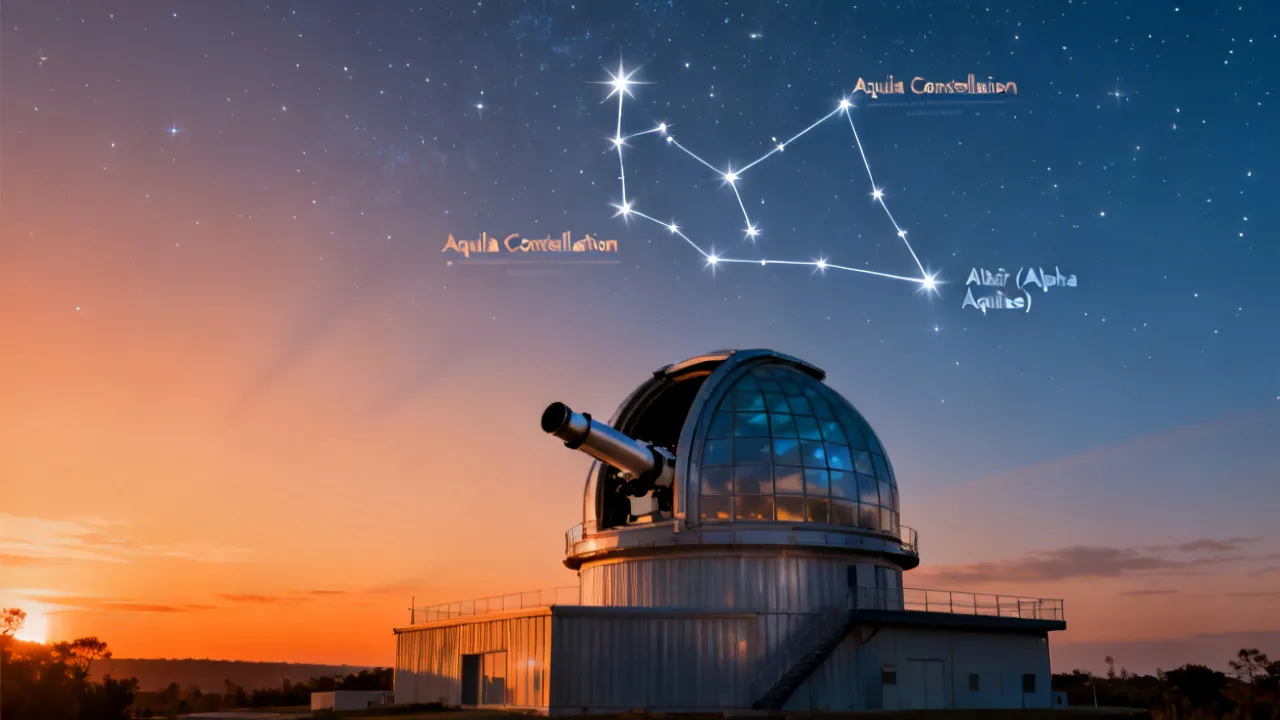
Aquila is a name that carries meaning across multiple domains—very notably as the Aquila constellation, but also as a label used by projects, organizations, organizations, and brands. For accurate use, the first step is to clarify which Aquila you mean (astronomy, institutional naming, or product context) and then evaluate sources, terminology, and intended scope. This guide provides an objective framework for that clarification, plus practical conditions and expert considerations.
In modern English usage, Aquila very commonly points to the constellation Aquila. Still, the same word can also appear in other settings—such as academic groups, software projects, mission names, ship or aircraft naming traditions, or consumer branding. Because a single term may refer to multiple entities, professional evaluation starts with disambiguation: identify the domain before you evaluate details.
From a reader’s perspective, “Aquila” can behave like a pivot word. If you encounter it in a paragraph with star names, coordinate concepts, or sky-view guidance, the odds are strong that the author means the constellation. If you encounter it in a paragraph with product features, support structures, project deliverables, or organizational statements, you should treat it as a label for a named entity rather than a celestial reference.
From an industry-analysis perspective, the risk is not that “Aquila” is unclear as a word, but that it can be ambiguous in context. When a term is used in marketing materials or technical documentation, misunderstandings can lead to incorrect assumptions—such as mixing astronomical references with product claims, or applying a cultural narrative to a purely technical system.
Professional due diligence tends to be less about “guessing what the author meant” and more about testing the claim against the right evidence. A reliable approach relies on three checks:
When these three checks align, the interpretation is usually straightforward. When they do not align, the safest professional stance is to treat the ambiguous statement as unverified until context is clarified.
The very stable, widely validated reference point for Aquila is the constellation Aquila. Constellations are standard categories in sky mapping used by astronomers and educators. Aquila is traditionally associated with the eagle figure in classical star-lore, and it contains notable stars such as Altair, which is frequently used for public astronomy education because of its brightness and role as a reference point for stargazing.
For objective readers, the key point is that constellation-based usage is supported by long-established astronomical conventions. That makes astronomy references comparatively easier to verify: you can cross-check star catalogs, planetarium materials, and reputable sky guides.
In practical stargazing contexts, Aquila often enters conversations in ways that are measurable and observational. People may talk about finding Aquila by identifying surrounding star patterns, connecting it to the Milky Way band, or using nearby reference points. When those observational framing cues are present, you can generally treat “Aquila” as a celestial subject.
Outside astronomy, Aquila can function as a proper name. In many industries, using a constellation or mythic symbol in naming follows a familiar pattern: memorable, short, and visually evocative. However, professional due diligence is necessary because the same name may belong to multiple unrelated entities.
Common non-astronomy patterns include:
Because these uses vary, professional readers should treat “Aquila” as a label until context confirms which entity is intended.
Another recurring issue in professional contexts is that organizations sometimes reuse terms across different product lines, documentation versions, or program phases. A brand name that appears in one repository might be the same “Aquila” as another repository, or it might be a different “Aquila” used independently. The safest method is to identify the entity at the record level (full name, website domain, legal identifier, repository owner, or official product SKU).
If you are encountering Aquila in documentation—whether technical, commercial, or informational—the evaluation method should mirror a quality-assurance workflow. Below is a practical, expert-oriented approach that emphasizes verification rather than assumption.
The general principle is that the meaning of “Aquila” should never be inferred solely from the word itself. Instead, the surrounding signals—terminology, formatting, citation style, and claim structure—should determine which interpretation is being asserted.
Ask: is “Aquila” used as an astronomical subject, a company/project name, or a product or service line?
Why this matters: the domain determines what counts as evidence. Astronomy claims can be cross-checked with sky mapping references; brand/project claims should be checked against corporate registries, documentation, or credible third-party coverage.
Domain classification often becomes obvious by scanning for the presence of domain-specific cues. In astronomy-related writing, you will often see mentions of constellations, stars, observational conditions, or sky coordinates. In corporate writing, you will often see mentions of deliverables, customer support, service level agreements, product specifications, or governance structure.
Expert readers know that terminology signals intent. Astronomy texts often include coordinate concepts and observational language (stars, constellations, visibility). Business or product materials use operational language (delivery, scope, features, support).
If the writing mixes these styles, treat it as a warning sign for sloppy sourcing—or possibly for content written for general aesthetics rather than factual instruction.
Terminology alignment is not about being “strict” or eliminating creative metaphors; it is about ensuring that when the author claims something factual, the language used to make the claim is consistent with the type of fact being asserted. For example, if a document claims measurable performance but uses astronomy-style phrasing without technical documentation, that mismatch may signal that the author is using “Aquila” as a symbol rather than as a factual referent.
For the constellation meaning, objective cross-checking may include planetarium resources, astronomy education references, and recognized astronomical organizations. For non-astronomy uses, the evaluation should focus on official identifiers (organization names, official documentation, governance or filings where applicable).
Condition: prefer references that describe the full scope of the entity, not only a logo or a slogan.
In practice, reputable references are those that provide stable identifiers and verifiable details. For astronomy, stable details include constellation boundaries, standard star names, and consistent mapping conventions. For projects and organizations, stable details include official websites, version-controlled documentation with clear ownership, public statements from the entity itself, and third-party reporting that can be traced to credible witnesses or documentation.
A robust verification method includes checking whether the “Aquila” reference remains consistent across updates. If a supplier, project, or product name changes frequently while claims remain vague, the mismatch can be a sign that the term is used for marketing rather than operational clarity.
Consistency is especially important for evaluating claims that influence decisions: procurement choices, partner onboarding, technical adoption, or educational curricula. If Aquila is referenced in one version of a document one way and in another version a different way, the change may be legitimate (e.g., renaming) or it may be confusion. The professional approach is to look for release notes, change logs, legal rebranding statements, or archived pages that show continuity.
To keep usage professional and objective, here are constructive scenarios where “Aquila” can be referenced responsibly, provided you clarify the context:
Responsible usage also includes citing uncertainty when uncertainty exists. For example, if you are not sure which Aquila an author intends, you should not rewrite their text as if you are certain. Instead, you can request clarification or add your own explicit disambiguation statement (e.g., “In this document, Aquila refers to X as indicated by Y”).
Below is an objective comparison framework you can apply when you encounter “Aquila” in documents. This is designed to prevent context drift and to support consistent decision-making.
| Scenario / Context | Primary Source Type | Step-by-Step Validation | Conditions / Requirements |
|---|---|---|---|
| Aquila as the constellation (astronomy use) | Recognized astronomy education references, observatory/planetarium materials, standard star catalog contexts |
1) Verify the constellation name “Aquila” and identify major reference stars (e.g., Altair). 2) Check whether the text uses standard astronomy language (constellations, stars, visibility). 3) Cross-check with reputable sky-mapping materials that reflect conventional naming. |
Must use astronomy-consistent terminology and avoid attributing non-astronomy meanings without explicit explanation. |
| Aquila as a project or organization name | Official organizational documentation, governance statements, credible third-party reporting where available |
1) Identify the full legal/entity name and scope (mission, program, product area). 2) Confirm operational details (who provides what, where, and how). 3) Validate that claims match documented capabilities and timelines. |
Requires clear entity identification (not just a logo or a short tagline) and consistent scope language. |
| Aquila as a consumer product or service label | Product documentation, formal specifications, customer-support policies, and verifiable supplier statements |
1) Confirm the product SKU/name and version details. 2) Evaluate whether performance or feature claims are supported by specifications. 3) Check supply/distribution clarity and support conditions for the intended market. |
Must include measurable specifications; vague claims should be treated as informational marketing rather than proof. |
| Aquila as cultural symbolism (generic metaphor) | Editorial sources and reputable cultural references |
1) Treat the usage as interpretation unless the source provides factual support. 2) Note whether the writing distinguishes metaphor from claim. 3) If factual claims exist, verify them separately in astronomy or institutional documentation. |
Requires clear signaling of metaphor vs. fact; avoid presenting interpretation as an objective statement. |
To maintain objectivity and avoid context errors, consider the following requirements when drafting content that includes Aquila:
These requirements help ensure that readers do not confuse the symbolic value of “Aquila” with a factual attribute derived from it. In other words, “Aquila” should be treated as a label first, and only converted into a specific meaning after the right evidence is presented.
In professional documentation, disambiguation is often implicit rather than explicit. For example, a technical report might use “Aquila” as an internal project name, but it will usually include a section where acronyms are defined, a reference to a code repository, or a line that indicates the organization sponsoring the project. Similarly, astronomy lesson materials might mention “Altair,” include constellation charts, or provide instructions on how to locate Aquila in the night sky.
When you are trying to evaluate or reuse someone else’s text, you can apply a few reliable heuristics. These heuristics do not require insider knowledge; they rely on observable patterns:
These heuristics help you avoid the common failure mode: reading the first sentence, assuming the “most famous meaning,” and then carrying that assumption forward even when later sections contradict it.
Even careful readers can be misled by a few recurring factors. Understanding these factors improves evaluation quality.
Some organizations use “Aquila” as a brand while not providing much textual detail in the materials you see first. If you only see a logo, tagline, or short slogan, you may be tempted to assume the domain. In professional settings, that is risky. Instead, seek the first occurrence of concrete details such as a legal name, domain/website, product documentation, or a registration identifier.
Aquila might appear as part of an acronym in one context and as a standalone name in another. For example, a document could refer to “Aquila” as a project but also include an acronym that happens to match astronomy-related words. This can cause confusion when reading quickly. Treat acronyms as labels that must be expanded and confirmed within the document’s “terms” or “glossary.”
Marketing materials often use evocative language: “vision,” “guidance,” “mapping,” “navigation,” “eagle-eye,” and so on. These rhetorical cues can resemble astronomy themes. If the marketing does not provide measurable technical evidence (specifications, validated performance tests, documented capabilities), then the safest conclusion is that “Aquila” is being used as a metaphor for marketing impact rather than as an astronomy reference.
A project called Aquila could have older documentation that mentions the constellation as part of its origin story, while newer documentation changes the context and focuses purely on product operations. Without checking version history or publication dates, you could misinterpret a legacy paragraph as the main meaning. Professional due diligence includes verifying that the document’s date and scope align with the claims you intend to rely on.
If you determine that the document is about the constellation Aquila, your verification work typically focuses on stable astronomical facts. While many details are widely known, verification still matters for educational accuracy.
One practical verification step is to check that the document’s description of Aquila aligns with standard references. Many astronomy education resources highlight specific stars; in this case, Altair is a common major reference. If a document mentions Altair in connection with Aquila, that alignment is usually a good sign. If a document claims different star associations that conflict with standard star-lore references, it may still be drawing from a specialized cultural narrative, an unusual naming convention, or simply an error.
A second step is to check whether any instructions for finding Aquila (in the night sky) are consistent with typical sky mapping practices. For example, the document might describe relative positions to other constellations, mention time-of-year guidance, or reference how brightness levels compare. If those instructions are vague (“look for the eagle in the sky”) without any mapping support, the content may still be educational, but it is less reliable for someone using it operationally.
A credible astronomy document tends to use terminology that is internally consistent. Terms like constellation, star, magnitude, right ascension (RA), declination (Dec), and sometimes catalog identifiers appear in more technical educational content. You do not need to be an astrophysicist to use these cues; you just need to see whether the document’s language matches the level of rigor it claims.
If the document claims “astronomical accuracy” but contains no verifiable details or provides only metaphorical statements, you should interpret it as general storytelling rather than a precise educational guide.
If “Aquila” is being used as a project, organization, or technical initiative, your verification work changes. Instead of checking star catalogs, you check identity and scope.
Start by finding the entity’s official name as well as governance or accountability signals. In professional contexts, these include:
Without these signals, “Aquila” could be a transient internal code name, a contractor initiative, or a marketing label without durable accountability. You can still engage with such a label, but you should not assume it has formal backing.
Next, examine what the entity claims to do. Does “Aquila” deliver a product? Provide services? Conduct research? Run an educational program? Each of these has different evidence requirements.
For example:
Vague claims without deliverables often indicate marketing rather than operational proof. That is not always bad—early-stage projects may be vague—but it should change how you treat the claim’s reliability.
Consistency over time can be verified via version control, release tags, changelogs, and document revision history. If “Aquila” is a product, it might have documented versions. If it is a project, it might have milestones or scheduled releases.
When you see version changes, you also look for continuity in ownership. If “Aquila” changes maintainers frequently and yet keeps the same marketing language, you should treat the product or project claims more cautiously.
Technical documentation often includes performance metrics, benchmarking results, and data-driven claims. These are especially sensitive to misattribution. If a document says “Aquila performs X,” you should ask:
For astronomical context, data provenance could include observational sources or catalog references. For technical and institutional context, provenance could include benchmark methodology, test configuration files, lab environment descriptions, or audit trails.
When “Aquila” is used as branding inspiration, it often draws from the eagle symbolism associated with the constellation. That symbolism can be used creatively in product naming, corporate storytelling, or visual design. However, the professional requirement remains the same: avoid confusing metaphor with fact.
Here is how to handle cultural symbolism in a way that preserves credibility:
If you are writing about such a brand and you wish to mention the constellation Aquila, it is best practice to clearly frame the constellation as the naming inspiration rather than as a factual component of the product’s operation—unless the company explicitly states it uses astronomical data.
When you need to interpret “Aquila” quickly but responsibly—such as when reviewing a document for adoption, summarizing content for stakeholders, or verifying citations—use a short checklist that aligns with the domain classification approach described earlier.
This checklist helps prevent the most common professional errors: misclassification, assumption-based reporting, and evidence mismatch.
A professional evaluation is often an evaluation of evidence types. “Aquila” could refer to different categories, and each category has different evidence that supports it.
Below is a more detailed view of what “good evidence” looks like for each domain:
Understanding failure modes can help ensure you apply the right level of skepticism and avoid unnecessary assumptions.
Because Aquila is well-known as a constellation, readers may default to astronomy. But a project named Aquila might be entirely unrelated. Avoid “defaulting” without checking the immediate context and terminology. If the document does not use astronomy cues, do not treat it as astronomy content.
A company might name a navigation system “Aquila” to evoke eagle-like vision. That naming does not mean the system uses real astronomical navigation data. Unless the company explicitly states such functional capability and provides technical evidence, treat the story as metaphor.
Sometimes a document includes a one-line description of Aquila and then proceeds to use it repeatedly without clarification. This can lead to misinterpretation by readers who only see the summary. Professional practice includes checking the detailed sections and searching for clarifying statements.
If Aquila’s meaning changes between versions of a document—e.g., from constellation reference in a teaching deck to a project name in a later technical release—your interpretation must follow the version context. Always check dates, revisions, and scope.
Aquila is very commonly recognized as the constellation Aquila in astronomy, traditionally associated with the eagle figure and containing notable stars used in sky references.
Yes. Aquila can also be used as the name of organizations, projects, or brands. Because these uses are unrelated to astronomy in many cases, you should confirm which “Aquila” is intended by context and source type.
Look for terminology. Astronomy discussions tend to mention stars, constellations, and observation concepts. Commercial or organizational usage uses operational language such as services, products, delivery, governance, or features.
Use a two-layer approach: (1) confirm the context (constellation vs. named entity), then (2) verify using domain-appropriate sources—astronomy references for celestial content and official documentation or credible reporting for organizational or product claims.
No. In professional writing, you should avoid assumptions. The same term can appear in multiple sectors, so clarity at the beginning of the text is a top practice.
The main risk is misunderstanding the context or implying facts that belong to the constellation rather than to the brand or organization. A professional approach separates metaphor from verifiable information.
If your role is writing documentation, teaching material, or marketing text that includes “Aquila,” you can reduce ambiguity dramatically by applying a few writing practices. These practices are not overly formal; they align with reader needs.
Instead of writing “Aquila is important,” write “Aquila (the constellation) is important for…” or “Aquila is our project name for…” This one sentence change eliminates the largest ambiguity.
If you define Aquila as the constellation, keep it as such. If it is a project name, do not later introduce astronomy terms unless you are making an explicit analogy. If you need an analogy, label it clearly as a metaphor.
If Aquila is a project or organization, add a stable identifier: an official website, repository owner, product SKU, department name, or a version label. Stable identifiers are especially helpful for readers trying to verify claims later.
If you’re writing about a brand that uses Aquila imagery, it is fine to tell the story of why the name was chosen. But specifications—performance, timelines, requirements, and limitations—should come from documentation and testing.
To reduce ambiguity in astronomy writing, authors can use patterns like:
These statements use astronomy conventions and provide verification cues.
For project writing, authors can use patterns like:
These statements use identifiers and operational scope cues.
For branding, authors can use patterns like:
This clearly signals metaphor while preserving credibility.
In summary, Aquila is a term with strong astronomical grounding as a constellation name, yet it also functions as a context-dependent identifier in non-astronomy domains. The professional way forward is to define the meaning at first mention, validate claims using domain-appropriate sources, and apply consistent requirements so that readers receive accurate, objective information rather than mixed interpretations.
A Guide to Cost-Efficient Small Electric Cars for Seniors

Mastering Debt Consolidation: Boost Your Credit Score and Manage Interest Rates

Your Guide to Loans, Credit Checks, and Interest Rates

Affordable Independent Living: Finding the Right Senior Housing

Guide to Senior Living Apartments: Affordable and Comfortable Environments

Leasing a Car: Expert Tips for Your Next Vehicle

Maintaining Oral Health After Tooth Loss with Dental Implants

Maintaining Oral Health with Dental Implants for the Elderly

Understanding 44539991272 and Supplier Sourcing

Aquila: Context, Uses, and Expert Guidance
This guide examines the meaning and practical relevance of Aquila across scientific, cultural, and branding contexts, with an expert lens on how to evaluate claims, select appropriate use-cases, and avoid mismatches. Objectively, “Aquila” is very widely recognized as the constellation Aquila, while it also appears as a name in organizations, projects, and product branding—each requiring careful verification of scope and intent.
